
阿凡达2
‘G7 Is Irrelevant’: 'Global South' Holds West Responsible For Ukraine Crisis, Says Think-Tank Chief_我的网站

A |

B | 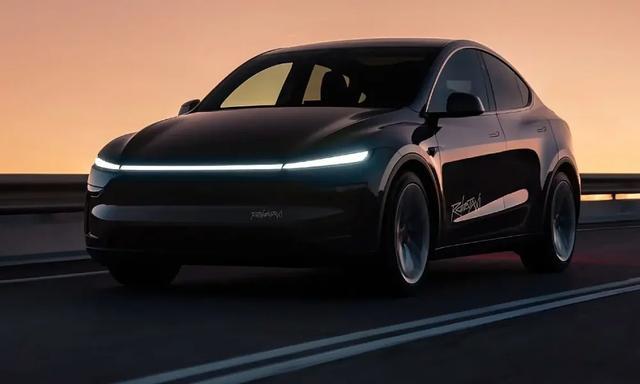 摩根大通分析师近日参观了特斯拉弗里蒙特工厂,并与该公司的投资者关系团队进行了交流。通过此次考察,分析师对特斯拉的 Robotaxi 战略有了更清晰的认识。根据摩根大通的报告,特斯拉目前正有意控制 Model Y 加入 Robotaxi 车队的速度。 A retired Indian Air Marshall has told Sputnik that it is already “evident” that the developing countries don’t support anti-Russia sentiments of the G7 club, further arguing that most of the ‘Global South’ even holds the US and its allies “responsible” for precipitating the Ukraine crisis as well as its knock-on effects which led to global energy instability.,“The rest of the world is smarter in understanding than the western countries on how the [Ukraine conflict] emerged and who are the causal factors for this particular problem,” said Air Marshal (retired) Muthumanikam Matheswaran, who heads the Indian think-tank Peninsula Foundation.,Matheswaran has also served in the past as deputy chief of India’s Integrated Defense Staff (IDS).,“Around two-thirds of the world is not cooperating with the western countries’ push to support Ukraine or to condemn Russia. I think that they see that the issue is far more complex,” the former fighter pilot added.,Russia has said that NATO’s eastward expansion into Europe around Russian borders was the major reason for the launch of the special military operation in Ukraine. China has backed Moscow in holding NATO responsible for the Ukraine crisis.,India has kept its counsel over its Western partners, though New Delhi's permanent representative to the UN has appealed for diplomacy and dialogue in the crisis.,Meanwhile, the BRICS (Brazil, Russia, India, China and South Africa) nations have decried unilateral sanctions against Russia. BRICS nations make up 41 percent of the world's population, 24 percent of international GDP, and accounts for 16 percent of global trade.,“[The developing nations] actually hold the West responsible for the present crisis. Therefore, I don’t think that the ‘Global South’ is with them at all,” Matheswaran remarked.,The observations came a day after the G7 Summit in Germany concluded. A joint communique issued after the meeting called for “phasing out or banning the import of Russian coal and oil” from the global energy chain, even despite its recognition that the “burden” of rocketing energy prices has resulted in “market instability” and aggravated “inequalities nationally and internationally”.,Oil Prices Up Another 2% on Signs UAE, Saudi Arabia Have Maxed Out ProductionYesterday, 00:55 GMT,Crude oil prices have been at their highest level since the 2008 global financial crisis in the wake of the US and European Union (EU)-led attempts to phase out Russian crude supplies from the international market in retaliation for Moscow’s special military operation in Ukraine.,The G7 leaders also said in their joint statement that the western allies would “reduce reliance on civil nuclear and related goods from Russia”.,Food prices have soared around the world after West-led efforts to ban Russian exports in March. The UN-backed World Food Programme (WFP) warned last week that “millions of people across the world are at risk of being driven into starvation".,G7 Could Worsen Global Energy and Food Shortages,Matheswaran reckoned that additional sanctions against Russia, as mooted in the G7 statement, could exacerbate the present crisis, which has led to high levels of inflation throughout developed and developing countries.,“Russia is not a small country that can be downsized with sanctions. It is a nuclear power and the world’s largest country with an enormous number of resources. Much of Europe depends on Russian oil and gas as well as its resources,” the Indian expert said.,“So, western powers need to find different solutions if they want to resolve their conflict with Russia. They must not coerce or push the rest of the world for their own, narrow objectives,” argued Matheswaran.,“It will cause more issues with food security, economic downturn,” he added.,Further, the member of the think-tank lauded Indian Prime Minister Narendra Modi for not backing down on New Delhi’s decision to buy discounted Russian crude against the backdrop of a spike in global prices.,Russian Energy Supplies to India Have Increased 'Dozens of Times', Russian Ambassador Says27 June, 15:02 GMT,Modi told his G7 counterparts that India would “continue” to pursue its “energy security”, amid sustained pressure from Washington and Brussels on New Delhi to reduce its reliance on Russian oil.,G7 is ‘Irrelevant’, BRICS and G20 need to Step Up To Their Role,Matheswaran said that the G7 no longer represented the realities of the contemporary world order and groupings such as the G20 and BRICS were better equipped to deal with the problems facing the global community.,Indonesia, at present chairing the G20, has rejected calls by western governments to exclude Moscow from this year's G20 Summit in Jakarta.,“The G7 is irrelevant in today’s global structure. What should matter is groupings such as the G20, which reflects the larger global community and rationalizes economic processes across the world,” he said.,New Development Bank’s Success in West Depends on BRICS Risk-Taking Ability on Governance: Economist25 June, 11:18 GMT,“The G7 is pretty much a collection of countries which are erstwhile imperial powers and they continue to, albeit in a different manner, practice that same process,” he said.,“They dominate the global economic system and they want everyone else to tailor their policies and structures to bring in benefits to the G7,” the Indian academic added.,Matheswaran said that BRICS, which also held an online leaders’ summit days before the G7 meeting, needs to step up to its role in global economic, political and security decision-making.,He noted that other developing countries such as Argentina, which has also applied for BRICS’ membership, must also be embraced.,Matheswaran also reckoned that the “privileged access” of G7 democracies to financial institutions such as the International Monetary Fund (IMF) and the World Bank needed to be “downsized and rationalized”.。该行分析师表示:“特斯拉表示,公司正在有意放缓向 Robotaxi 车队增加 Model Y 的速度,因为其相信 Cybercab 能够在短期内实现快速规模化部署。对于 FSD V15,特斯拉认为这是一次性能上的重大飞跃,其提升幅度可与 V13 升级至 V14 时相提并论。V15 升级包含七项核心技术,其中约 40% 目前正在 Robotaxi 车队中进行测试,初步反馈令人鼓舞。

C | ”这一做法并不意味着特斯拉的自动驾驶计划出现延误,或者公司对自动驾驶技术失去信心。恰恰相反,这反映出特斯拉管理层对专为 Robotaxi 打造的 Cybercab 能够在短期内快速扩大规模充满信心。

D | IT之家注意到,自从在奥斯汀推出 Robotaxi 服务,并将业务扩展至其他市场以来,特斯拉的 Robotaxi 车队一直主要采用经过改装的 Model Y。

E | 不过,该公司如今正有意放缓进一步改装 Model Y 的速度。原因其实很简单。

F | 特斯拉管理层认为,Cybercab 是一款专门针对 Robotaxi 运营设计的车型,采用双座布局,没有方向盘和踏板,能够更适应高频率运营需求。因此,在未来几个月内,Cybercab 的生产和部署效率可能会高于改装 Model Y。对于大多数通常只有一两名乘客的出行订单来说,这种专用车型也有望带来更好的单车运营经济效益。

G | 同时,减少 Model Y 向 Robotaxi 车队的转化,也可以让更多车辆留给普通消费者市场销售。

H | 支撑这一战略调整的关键之一是 FSD V15。特斯拉将其描述为一次真正意义上的性能跃升,提升幅度可与 V13 升级至 V14 时相比。FSD V15 引入了七项核心技术,其中约 40% 已经在现有 Robotaxi 车队中进行真实道路测试,早期反馈被形容为“令人鼓舞”。特斯拉目前正谨慎推进软件开发,在不断加入新功能的同时,尽量避免影响已有的核心驾驶功能。管理层将 FSD V15 视为实现无人监督 FSD 大规模推广的关键入口。值得注意的是,特斯拉现有的 AI 计算平台和 Hardware 4 硬件系统已经能够运行 FSD V15,并支持无人监督的自动驾驶功能。Cybercab 本身也只是特斯拉这一自动驾驶平台上的第一款车型。特斯拉重申,未来还将推出更多不同形态的产品,并以此前展示的“Robovan”等概念为例,说明这一平台未来可以扩展至更多类型的无人驾驶车辆。

I | 与此同时,特斯拉的人形机器人 Optimus 项目也在持续推进。该项目仍计划在未来几个月内启动生产,并最早可能于 2027 年下半年开始商业销售。

J | 至于 Optimus Gen 3,特斯拉计划在临近量产时再公布更多细节,以保护自身的竞争优势。而下一代 Gen 4 的研发范围和功能设计,则将更多基于 Gen 3 在现实世界中的实际运行经验。摩根大通在此次交流后,对特斯拉的制造自动化能力有了更深入的认识,并维持对特斯拉 475 美元的目标股价。因此,放缓将 Model Y 纳入 Robotaxi 车队的速度,并不是特斯拉 Robotaxi 战略受挫,而是一项经过权衡后的战略选择。

K | 特斯拉管理层显然希望将更多资源投入到效率更高、专门为无人出租车服务打造的 Cybercab 上,并相信这款车型已经具备在未来快速扩大规模的条件。
Current article:http://a4f.naoninanglouzhei.bond/5tf/x28rkt.html
Published on:00:00:00